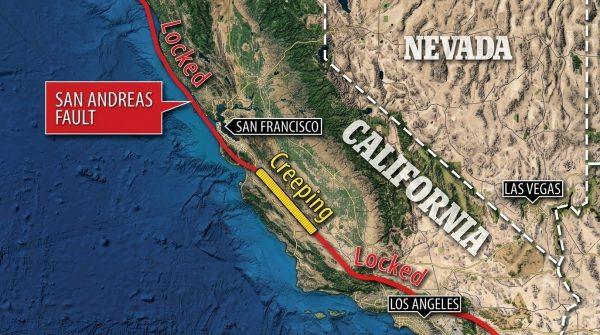
California's landscape is shaped by its restless geology, and for nearly 20 million residents, living near a fault line is a daily reality. From the Bay Area to Los Ángeles and San Diego, the threat of a major earthquake looms large. The United States Geological Survey (USGS) has identified a critical challenge: the stability of urban infrastructure in the face of inevitable tectonic activity. This isn't just a scientific concern—it's a pressing issue for families, businesses, and communities across the state.
The Real Risk: Living on the Edge
The San Andreas Fault system, a transform boundary between the Pacific and North American plates, is the most famous, but it's far from the only danger. Secondary fault lines crisscross densely populated areas, increasing the risk of significant seismic events. For example, the Hayward Fault in the East Bay and the San Jacinto Fault in Southern California are considered particularly hazardous. Recent studies show that the accumulation of geological tension along these fractures determines the frequency and intensity of earthquakes. As one seismologist put it, "The ground beneath our feet is constantly moving, and we must adapt to that reality."
This isn't just about the big one. Smaller, more frequent quakes serve as reminders of the constant pressure. The 1906 San Francisco earthquake remains a turning point, transforming architecture and spurring modern seismology. But history also shows that activity isn't limited to the San Andreas. The 1994 Northridge earthquake, for instance, caused $20 billion in damage and highlighted vulnerabilities in building codes.
Urban Preparation: What's Being Done
State and local authorities are ramping up efforts to mitigate the impact. A network of seismic sensors detects ground movement in real-time, while early warning systems send alerts to mobile devices seconds before shaking begins. These precious seconds can mean the difference between life and death. Structural engineers are reinforcing key infrastructure—hospitals, schools, and bridges—to ensure they remain operational after a quake. Meanwhile, updated hazard maps guide new construction permits, steering development away from the most dangerous zones.
But preparation goes beyond government action. Specialists conduct periodic drills to train residents on evacuation routes. Emergency management entities recommend storing basic supplies to cover needs for the first 72 hours. As one expert noted, "Individual readiness is just as important as public policy." For Latino families, this is especially critical, as many live in older housing stock that may not meet current seismic standards. Programs like California Utility Aid can help free up funds for home safety upgrades.
Mitigation Measures: Strengthening Our Communities
Government agencies are intensifying inspection programs for older structures, adapting them to current demands. This investment in structural strengthening is indispensable for saving lives. At the same time, community education is being promoted so that every household checks the securing of heavy furniture and structural elements that could pose a danger during a quake. Simple steps—like bolting bookshelves to walls or knowing how to shut off gas lines—can make a huge difference.
Investment in critical infrastructure projects helps electricity and water supply networks withstand tectonic forces without collapsing, avoiding health crises that would worsen the situation for citizens. However, officials emphasize that no technology replaces individual preparation. Families are encouraged to establish internal communication plans and safe meeting points outside vulnerable zones. This is particularly important for immigrant communities, who may face language barriers or lack access to information. Resources like Free IRS Tax Help for Immigrants can also connect families with broader support networks.
Long-Term Impact: Building a Safer Future
Geologists are developing new predictive models following recent events to improve hazard maps, analyzing tectonic plate behavior and its direct influence on populated zones. This effort aims to perfect care processes and ensure that any future urban project maintains the quality levels demanded by science. The state administration is setting a precedent in safety management regarding California fault lines.
Transparency guides these efforts, with public data on fault lines and risk zones available online. For Latino residents, staying informed is key. Whether you live in the Central Valley, the Inland Empire, or along the coast, understanding your local risk is the first step toward safety. As one community leader put it, "We can't change the geology, but we can change how we prepare."
For those looking to make their homes safer, consider checking out Modesto Offers California Renters More Space for $1,500 a Month for affordable housing options that may be in lower-risk areas. And for entrepreneurs, the NYC Future Fund shows how innovation can thrive even in challenging environments.