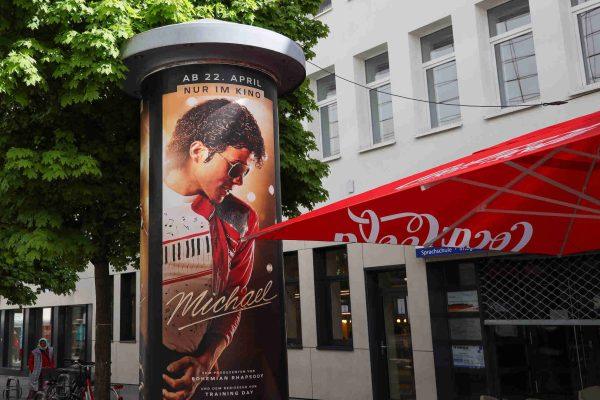
When Antoine Fuqua set out to direct the Michael Jackson biopic starring Jaafar Jackson, he faced a delicate balancing act: how to honor the King of Pop’s musical legacy without getting tangled in the legal and personal controversies that defined his later years. The result, released in 2026, is a film that stops in 1988—at the peak of Jackson’s career—and deliberately avoids the child sexual abuse allegations that surfaced in 1993.
In a recent interview, Fuqua explained that the production team, including producer Graham King and screenwriter John Logan, made a conscious choice to focus on Jackson’s artistic rise and the emotional abuse he endured from his father, Joseph Jackson. “We wanted audiences to connect with the human being on stage,” Fuqua said. “Including the allegations would have taken the story out of context for people who don’t know the full magnitude of his career.”
Legal Limits and Deleted Scenes
What many viewers don’t realize is that the film originally included scenes from Jackson’s later life, including the 1990s investigations. However, a clause in the out-of-court settlement with the Chandler family—the first to accuse Jackson of abuse—restricts how cinema can portray that specific case. Fuqua confirmed that these scenes were cut to avoid legal conflicts, though he hinted the material could resurface in future projects.
The director also revealed that the team shot extensive material covering Jackson’s later years, but the legal barriers proved insurmountable. “We analyzed the allegations in depth,” Fuqua said, “but the clause made it impossible to dramatize them without risking litigation.” This decision aligns with the vision of Jackson’s heirs, who wanted the film to celebrate his artistry rather than dwell on his legal battles.
A Focus on Family Trauma
Instead of the courtroom, the biopic zeroes in on the toxic domestic environment created by Joseph Jackson, the patriarch who pushed his children to stardom through harsh discipline. Fuqua argues that this abuse is the true root of Michael’s emotional struggles. “You can’t understand the artist without understanding the pain he carried,” the director said. The film portrays Joseph as a complex figure—both a driving force and a source of deep wounds.
This narrative choice has sparked debate among critics and fans. Some argue that a biopic of this magnitude should offer a raw, unflinching look at Jackson’s life, including the allegations. Others praise the film for focusing on the music and the man behind it, leaving the shadows for the courts and public memory. “It’s a tribute, not a trial,” one reviewer noted.
Jaafar Jackson: Carrying the Legacy
At the heart of the film is Jaafar Jackson, Michael’s nephew, who embodies his uncle with striking physical precision. Jaafar’s performance has been widely praised, with many noting that he captures not just the moves but the vulnerability that made Michael a global icon. For those curious about his background, Jaafar’s Colombian roots add a layer of cultural richness to the story, connecting the Jackson family to Latin America through his mother, Alejandra Rodríguez.
The biopic’s success at the box office—shattering records with an $18.5 million opening day—shows that audiences are eager to celebrate Jackson’s music. Yet the film also leaves a lingering question: can we separate the art from the artist? Fuqua’s answer is clear: “Michael’s legacy is his music. That’s what unites cultures.”
A Divided Legacy
The decision to end the story in 1988 has ignited conversations about how we remember public figures. For many Latin American fans, Jackson’s music was a bridge—his rhythms and videos influenced artists from México to Bogotá. The film’s focus on his artistry resonates in a region where his hits like “Thriller” and “Billie Jean” remain timeless.
Ultimately, the Michael Jackson biopic chooses the path of artistic redemption. It leaves the controversies for history books and documentaries, offering instead a portrait of a genius who changed pop music forever. As Fuqua put it, “We wanted to remind the world why they fell in love with him in the first place.”