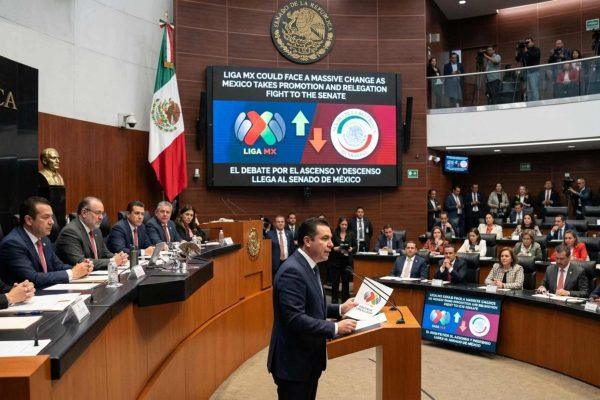
The long-simmering dispute over the abolition of promotion and relegation in Mexican soccer has reached the halls of Congress. During a special hearing at the Senate of the Republic in Mexico City, lawmakers unveiled a comprehensive reform proposal aimed at updating the country's sports legislation. The bill seeks to make sporting merit a legally binding principle for all national sports federations, effectively forcing Liga MX executives to reopen the pathway between the first division and the lower tiers.
For fans and players alike, this is more than a bureaucratic maneuver—it's a fight for the soul of Mexican football. The current crisis traces back to April 2020, when club owners voted to suspend promotion and relegation, citing the need to stabilize financially struggling second-division teams during the pandemic. What was initially presented as a temporary five-year moratorium, set to expire this season, quietly became permanent when league administrators removed the mechanism from their official regulations altogether.
Owners stay silent, players speak out
When Senate leaders invited Liga MX executives to participate in the legislative dialogue, the top brass declined to attend. That absence spoke volumes. Meanwhile, players and team representatives from the lower divisions delivered impassioned testimony about the economic harm and sporting stagnation caused by the closed system. On the pitch, some teams have staged visible protests, standing motionless after the opening whistle to highlight how shielding top-flight clubs from relegation breeds mediocrity and devalues investment in smaller clubs.
The push for legislative action comes as Mexico's antitrust commission, the Comisión Federal de Competencia Económica (COFECE), has opened a formal investigation into potential anti-competitive practices linked to the closed league structure. This dual pressure—from both the Senate and the competition watchdog—marks a critical juncture for Mexican soccer. If the bill passes, it could dismantle the current governance model and reshape the business of sports across the country.
For a nation where football is more than a game, the stakes are immense. The Liga MX has long been a source of pride and identity, but its recent trajectory has raised questions about fairness and meritocracy. As the debate unfolds, many are drawing parallels to other leagues in the Americas that have maintained open systems, such as Argentina's Primera División and Colombia's Categoría Primera A, where relegation battles are as intense as title races.
The proposed reform also resonates beyond the pitch. It touches on broader themes of accountability and transparency in sports governance, issues that have gained traction across Latin America. In Mexico, where the Latino leaders list often highlights figures who challenge the status quo, this legislative effort could be seen as part of a larger movement toward institutional change.
While the Senate prepares to debate the bill, the football community remains divided. Some argue that a closed league ensures financial stability and attracts investment, while others insist that the absence of relegation kills the competitive spirit that makes football so compelling. The testimonies from lower-division players painted a stark picture: without the possibility of promotion, their careers and clubs are left in limbo, with no incentive to invest in youth development or infrastructure.
The timing is also notable. With the 2026 World Cup on the horizon, hosted by Mexico, the United States, and Canada, the spotlight on Mexican soccer has never been brighter. As Rafa Márquez's first Mexico squad begins to take shape, the structural issues within the domestic league could have ripple effects on the national team's talent pool.
For now, all eyes are on the Senate. The outcome of this legislative push could either preserve the status quo or usher in a new era of openness and meritocracy in Mexican football. As the debate intensifies, one thing is clear: the voices of players, fans, and lawmakers are no longer willing to accept a system that silences competition. The ball is now in the court of the legislators, and the entire footballing world is watching.