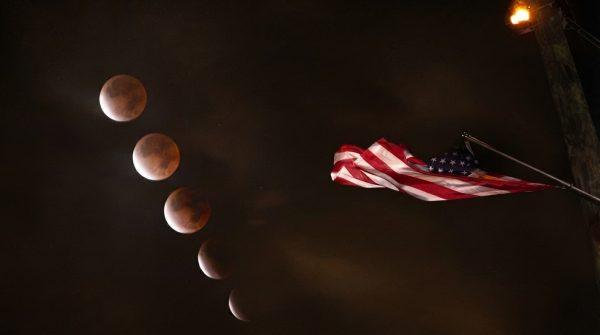
On the night of Thursday, August 27, and into the early hours of Friday, August 28, skywatchers across the United States will be treated to a deep partial lunar eclipse. Our planet will slide directly between the Sun and the Moon, casting its shadow over 96% of the lunar surface. It's the kind of event that pulls people out of their homes, onto rooftops, and into parks—no telescope required.
Unlike a total eclipse, the Moon won't completely disappear. Instead, it will take on a striking reddish-orange hue, a phenomenon often called a "blood moon," though astronomers are quick to note this one is technically partial. Still, with 96% coverage, the visual effect will be dramatic.
When and where to watch
The partial phase begins at 8:12 p.m. Pacific Time on Thursday, August 27, and reaches its maximum at 12:12 a.m. Eastern Time on Friday. The entire process, from penumbral start to finish, will last about five and a half hours, with the partial phase alone stretching over three hours. That gives plenty of time for families, students, and night owls to step outside and look up.
Here's a breakdown of key viewing times by region:
- West Coast (Los Angeles, Portland, Seattle): Partial phase begins at 8:12 p.m. PT, with maximum around 9:12 p.m. PT. The Moon will be well above the horizon, making for excellent urban viewing.
- Mountain Time (Denver, Phoenix): Maximum occurs around 10:12 p.m. MT, with the eclipse already underway at sunset.
- Central Time (Chicago, Dallas, Houston): Maximum at 11:12 p.m. CT, just before midnight—perfect for a late-night outing.
- Eastern Time (New York, Miami, Atlanta): Maximum at 12:12 a.m. ET on Friday, August 28. The Moon will be high in the sky, offering clear views from most locations.
States with particularly favorable conditions include California, Texas, New York, Florida, Illinois, Arizona, Washington, Colorado, and Georgia. In Hawaii, the Moon will be rising as the eclipse unfolds, so viewers there will see it later in the night, with a slightly different perspective.
Why this eclipse matters
This event is more than just a pretty sky show. It's a chance to connect with the cosmos and with each other. For many Latino communities across the US, lunar events carry cultural significance—from traditional stories to modern gatherings. In cities like Los Angeles, Houston, and Miami, local astronomy clubs and community centers are organizing watch parties, turning a scientific moment into a social one.
Scientists are also paying close attention. The eclipse's long duration and high coverage make it a valuable opportunity for research and education. NASA and other institutions are encouraging people to observe and share their experiences, hoping to spark interest in space science among younger generations.
One of the best parts? You don't need any special equipment. Unlike solar eclipses, which require protective glasses, lunar eclipses are safe to view with the naked eye. Binoculars or a small telescope will enhance the view, but they're not necessary.
For those who miss this one, the next total lunar eclipse visible from the Americas won't occur until 2029. So mark your calendars, set your alarms, and step outside. The Moon is waiting.
If you're interested in other celestial events, check out our guide to the August 2026 total solar eclipse visible from Spain and Iceland. And for a cultural touch, read about Maná's new Apple Music series—a perfect soundtrack for a night of skywatching.