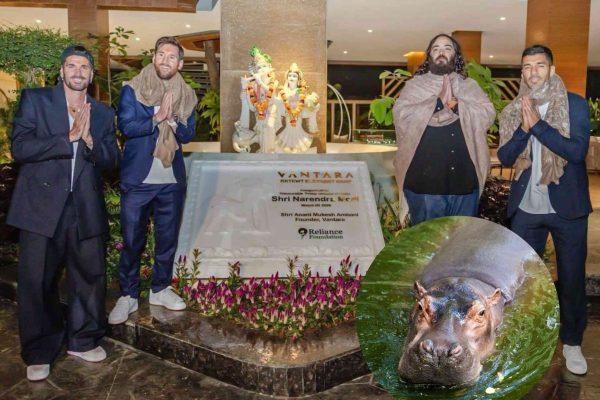
For decades, the hippos of Pablo Escobar have roamed the Magdalena River basin in Colombia, a living reminder of the drug lord's exotic whims. Now, a surprising proposal from India could change their fate. The Vantara biotech sanctuary, a sprawling 1,200-hectare facility in Gujarat, has offered to take in 80 of these animals, providing an alternative to the Colombian government's authorized euthanasia plan.
Vantara is no ordinary zoo. Built by the Ambani family, one of India's wealthiest dynasties, it functions more like a genomic laboratory than a traditional reserve. The sanctuary boasts hyperbaric oxygen chambers, hydrotherapy pools with 260 pressure jets, and 9,300-square-meter operating rooms designed for complex wildlife surgeries. A robotic kitchen processes over 150,000 kilos of food daily to sustain its inhabitants. For a Latino audience familiar with the environmental crisis Escobar's hippos have caused, this high-tech solution feels like a plot twist from a García Márquez novel—surreal yet grounded in real science.
The proposal comes as Colombia struggles to control the hippo population, which has grown to over 150 animals since Escobar imported them in the 1980s. These invasive hippos disrupt local ecosystems, threaten fishermen, and have no natural predators. The government's euthanasia plan, announced in 2023, sparked international debate. Enter Vantara, which sees the hippos not as a problem but as a species worth saving with cutting-edge care.
This potential relocation marks a historic shift from narco-extravagance to billionaire philanthropy. The hippos originally lived at Hacienda Nápoles, Escobar's private estate near Puerto Triunfo, Antioquia. After his death in 1993, they escaped and thrived in the wild. Now, Anant Ambani, the youngest son of India's richest man, wants to give them a new home. Ambani recently hosted Mark Zuckerberg and Bill Gates at Vantara, positioning the sanctuary as a model for compassionate wildlife management.
But the logistics are daunting. Moving 80 hippos, each weighing up to two tons, from Colombia to India requires a web of international permits, veterinary protocols, and funding. The Ambani family has deep pockets, but the operation also depends on approval from Colombian environmental authorities and CITES, the global wildlife trade convention. If successful, it would be one of the largest transcontinental relocations of invasive species in history.
For the Latino community, this story resonates beyond ecology. It touches on themes of legacy, responsibility, and the long shadow of the drug trade. Escobar's hippos have become a symbol of how narco-wealth can distort nature. Now, they might become a symbol of how technology and philanthropy can correct past mistakes. As one Colombian biologist told El Tiempo, "This is not just about hippos. It's about how we deal with the consequences of our history."
The Vantara proposal also raises ethical questions. Is it right to move invasive species across continents? Could the hippos adapt to India's climate? Some experts argue that euthanasia is more humane than uprooting animals from their current habitat. Others see Vantara as a lifeline. The debate mirrors broader conversations in Latin America about conservation, development, and the role of private wealth in public problems.
Meanwhile, the Ambani family continues to expand Vantara's reach. The sanctuary already houses rescued elephants, rhinos, and big cats, all cared for with the same futuristic technology. If the hippos arrive, they will join a menagerie that includes a man-made jungle of ten million trees. For a story that began with a drug lord's caprice, this ending—if it happens—would be unexpectedly hopeful.
As the world watches, the hippos of the Magdalena River may soon trade Colombia's lush landscapes for India's high-tech oasis. It's a journey that spans continents, cultures, and decades—a reminder that even the strangest legacies can find redemption.