In a charity auction that blends pop culture and football fandom, the jersey worn by BTS member Jimin during the 2026 World Cup final halftime show has outpaced bids for a signed Lionel Messi Argentina shirt. The auction, organized by Christie's and Global Citizen, aims to raise funds for children's education in vulnerable communities across 200 countries. With six days still on the clock, Jimin's jersey has reached $14,000—more than double the initial estimate and well above the $6,000 bid for Messi's autographed jersey, which was originally gifted to Shakira by the Argentine captain.
A clash of fandoms and cultural weight
The bidding war underscores the immense devotion of BTS's global fanbase, known as ARMY, and their ability to elevate any item tied to the group into a coveted collectible. Jimin wore the white, red, and black outfit during his performance of "Dynamite" at the final in the United States, a moment that resonated deeply with Latino audiences who tuned in across México, Colombia, and the broader diaspora. The jersey's design, blending South Korean urban aesthetics with contemporary sportswear, has become a symbol of the intersection between K-pop and Latin pop culture—a connection that has grown stronger through collaborations and shared fan communities.
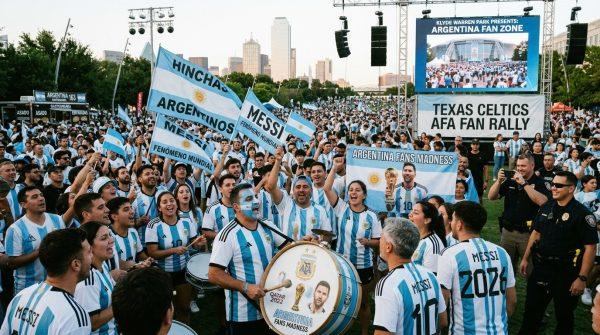
Meanwhile, Messi's signed shirt, a relic from the final where Argentina triumphed, has drawn comparatively modest interest. While the Argentine star's legacy is undisputed—especially after his words to young talent Lamine Yamal following the match—the auction results suggest that the cultural moment of Jimin's performance has captured a different kind of collector energy. The jersey now rivals the official match ball from the final, which is also up for bids, signaling a shift in what fans consider valuable memorabilia.
The auction catalog includes other notable items: a personalized ball signed by Shakira, Kaká, and FIFA president Gianni Infantino; the outfit Shakira wore in her music video for the tournament's anthem; and goalkeeper gloves covered in Swarovski crystals that Madonna used during her halftime appearance. These pieces fuse music and football, reflecting the global spectacle of the World Cup final.
For Latino fans, the auction is a reminder of how the World Cup serves as a cultural crossroads. The event brought together artists from South Korea, Colombia, and the United States, and the bidding for Jimin's jersey highlights the growing influence of Asian pop stars in Latin America. This is not the first time BTS has made waves in the region—their music has topped charts in Argentina and Chile, and their fanbase in Brazil is among the largest in the world.
The auction's proceeds will support education and sports programs in underserved areas, a cause that resonates across Latin America, where access to quality education remains uneven. As the bidding continues, the jersey's price may climb further, but its symbolic value is already clear: it represents a moment when a South Korean artist's performance on a global stage captured the imagination of a bicultural audience, from Buenos Aires to Los Angeles.
For those following the story, the auction also ties into broader narratives around Messi's legacy and his connections to the diaspora, as well as the backstage dynamics that shaped the halftime show. But for now, the spotlight is on Jimin's jersey—and the fans who are willing to pay top dollar to own a piece of that history.