When the United States hosted the World Cup in 1994, the country had no top-flight professional soccer league. That changed two years later with the birth of Major League Soccer, and from day one, Latino players were not just participants — they were architects. The league’s DNA was written in the flair of Colombian playmakers, the grit of Bolivian defenders, and the showmanship of Mexican goalkeepers. Now, as the 2026 World Cup approaches, MLS has become an exporter of talent and a home for world champions, with Latino stars at the center of both stories.
The Founders: Valderrama, Campos, and the First Dynasty
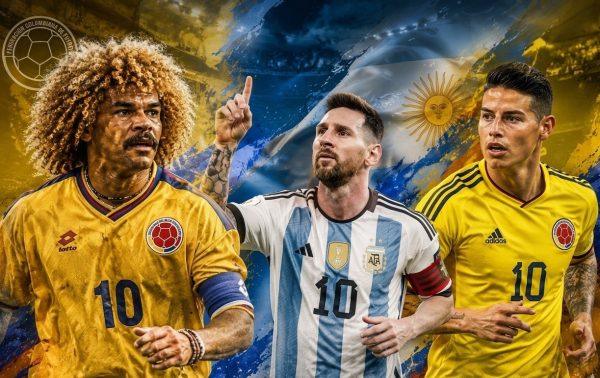
The early years of MLS were defined by players who brought the soul of Latin American football to American pitches. Carlos “El Pibe” Valderrama, fresh off captaining Colombia in the 1994 World Cup, became the league’s first Most Valuable Player in 1996 while playing for the Tampa Bay Mutiny. His iconic mane and elegant number-ten style gave MLS a touch of South American artistry that television audiences couldn’t ignore.
In Washington, D.C., a Bolivian connection built the league’s first dynasty. Marco Antonio “El Diablo” Etcheverry and Jaime Moreno led D.C. United to four MLS Cup titles, with Etcheverry’s ferocious left foot and Moreno’s clinical finishing setting a standard that few teams have matched. Meanwhile, on the West Coast, Mexican goalkeeper Jorge Campos brought a revolutionary aesthetic to the LA Galaxy and Chicago Fire. His self-designed, multicolored jerseys and his ability to play as a forward made him a symbol of the league’s early, exuberant identity.
Other Mexican legends followed: Carlos Hermosillo and Claudio Suárez — the latter known as “El Emperador” — anchored defenses at Chivas USA, proving that Mexican heritage was central to soccer’s growth in California. These players didn’t just fill rosters; they gave MLS a visual and competitive identity that resonated with the growing Latino fanbase across the United States.
From Receiving to Exporting: The MLS of Today
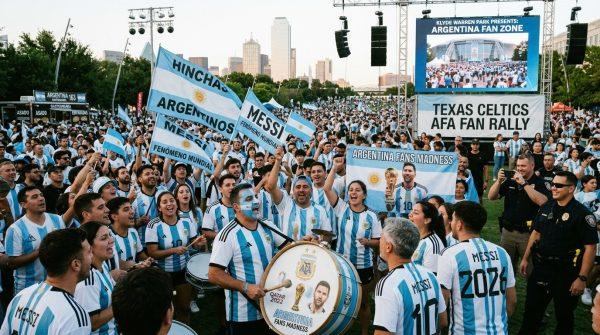
Fast forward to 2026, and the script has flipped. MLS no longer imports aging stars as a finishing touch; it now develops and exports talent to Europe’s top leagues while also attracting global icons in their prime. The most striking example is Inter Miami, the reigning 2025 MLS Cup champions, who could send Lionel Messi and Rodrigo De Paul — both active world champions — to the 2026 World Cup. That would be an unprecedented milestone: never before have current World Cup winners played in MLS and then represented their countries on the sport’s biggest stage.
The Latino presence in the 2026 tournament extends far beyond Argentina. James Rodríguez, Colombia’s captain and creative heartbeat, has rebuilt his rhythm at Minnesota United after a stint in Brazil. Paraguay’s hopes rest on Miguel Almirón, who returned to Atlanta United after a successful spell in England’s Premier League, alongside Matías Galarza and Andrés Cubas (Vancouver Whitecaps). Panama’s veteran Aníbal Godoy (Minnesota) and Carlos Harvey provide the tactical discipline that has made the Canaleros a rising force.
Even the United States men’s national team, now coached by Argentine Mauricio Pochettino, reflects this bicultural pipeline. Cristian Roldan, a Seattle Sounders stalwart of Mexican-American heritage, embodies the dual identity that defines so many MLS-produced players. Meanwhile, academy products like Obed Vargas and Brian Gutiérrez represent the next wave — young talents who could choose to play for either Mexico or the United States.
The export stamp is equally strong. Players who honed their craft in MLS before moving to Europe — such as Juan Camilo “Cucho” Hernández (formerly Columbus Crew, now Real Betis), Ricardo Pepi, Alejandro Zendejas, and Gio Reyna — prove that the league has become a legitimate launching pad for elite careers. As Mexico threatens World Cup bans for Liga MX stars who skip national camp, the contrast with MLS’s collaborative approach is striking.
The story of MLS and the World Cup is, at its core, a story of Latino influence. From the colorful kits of Campos to the golden boots of Messi, the league has completed a perfect cycle: built by Latino stars, sustained by Latino fans, and now led by Latino legends into the sport’s greatest tournament. As the 2026 World Cup kicks off across North America, that heritage will be on full display — not as a footnote, but as the main narrative.