When Lionel Messi first stepped onto the Camp Nou pitch in 2005, he was a shy teenager from Rosario, Argentina, with a mop of dark, unkempt hair that seemed to have a life of its own. That look—part boyish charm, part chaotic energy—was the visual signature of a prodigy who would go on to redefine football. But as his career evolved, so did his style, turning Messi into not just an athlete but a global brand whose grooming choices often mirrored his biggest moments on the field.
The Long-Haired Prodigy: 2005–2010
During his early years at FC Barcelona, Messi’s long hair became part of his identity. It was practical—he often wore headbands to keep it out of his eyes during high-speed runs—but it also signaled youth and rebellion. At the 2006 World Cup in Germany, he was still a raw talent, and his hair reflected that: untamed, natural, and unpretentious. By the time he helped Argentina win gold at the Beijing 2008 Olympics, the headband had become a staple, a subtle nod to the gaucho aesthetic that resonated with fans back home.
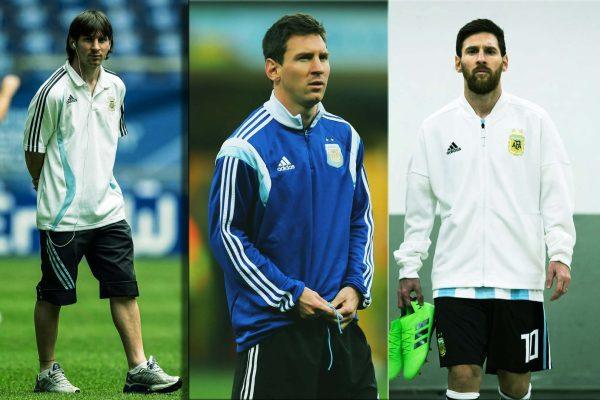
This phase ended as Messi’s game matured. After the 2010 World Cup in South Africa, he began to trim his locks, adopting a cleaner, more controlled look. It was a subtle shift, but one that signaled a new seriousness. Off the pitch, he started appearing at FIFA Ballon d’Or galas in tailored suits alongside his wife, Antonela Roccuzzo, trading his boyish image for something more refined.
The Beard and the Platinum Revolution: 2016–Present
The most dramatic change came in 2016, just before the Copa América Centenario. Messi debuted a thick, auburn beard that immediately became his new trademark. It was a bold move for a player who had always been clean-shaven, and it coincided with a period of intense pressure: he had just lost the 2014 World Cup final and the 2015 Copa América final. The beard seemed to armor him, giving him a rugged, battle-hardened look.
Later that year, he shocked the football world by dyeing his hair platinum blonde while keeping his beard dark. The contrast was jarring, almost punk rock, and it dominated headlines. Some critics called it a distraction, but Messi’s performance on the pitch never wavered. In fact, the platinum era marked the beginning of his most dominant stretch with Argentina, culminating in the 2021 Copa América and the 2022 World Cup titles. As defenders who tried to stop him can attest, his focus was unshakable.
Today, Messi’s style is a study in precision. His beard is neatly trimmed, his hair is often styled in a high fade, and his off-field wardrobe leans toward minimalist luxury. At Inter Miami, he’s embraced a more relaxed look, but the beard remains a constant. It’s a far cry from the Rosario kid who played with his hair in his eyes, but the evolution feels earned—a visual timeline of a man who grew up in the spotlight.
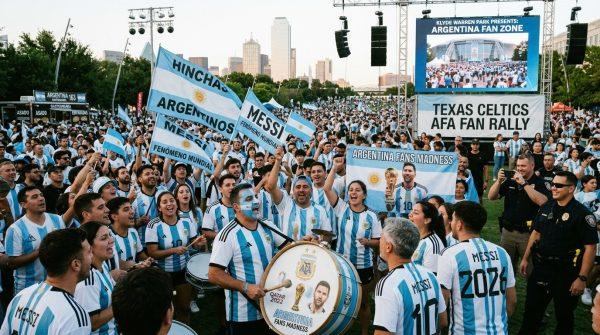
For fans across Latin America, Messi’s style journey is more than just fashion. It’s a reflection of how he navigated the weight of expectations, from the streets of Rosario to the world stage. And as he prepares for what could be his final World Cup in 2026, his look will undoubtedly continue to evolve, but the essence—the quiet confidence of a crack—remains unchanged.