With rising costs in the United States, many retirees are looking across the Atlantic for communities where their fixed income affords not just basics, but a life rich in culture, history, and comfort. A recent analysis identifies several European cities where a monthly budget of approximately $2,000 can secure a high quality of life, from coastal towns to mountain retreats.
Affordable Living in the Balkans
The search often begins in Southeastern Europe, where countries like Bulgaria and Romania combine deep history with remarkably low expenses. Plovdiv, Bulgaria, one of Europe's oldest continuously inhabited cities, is celebrated for its walkable ancient core and arts scene. Here, estimated monthly living costs excluding rent are around $700, with apartments renting for well under $400. This allows a couple to live comfortably within a $2,000 budget, exploring Roman theaters and Renaissance architecture without financial strain.
Further east, Varna, Bulgaria offers a lifestyle centered on the Black Sea, with mild winters and a vibrant summer atmosphere. Monthly costs for a couple rarely exceed $1,800. In the Carpathian Mountains, Brașov, Romania attracts those who love skiing and hiking, coupled with a healthcare system where medications can cost significantly less than in the U.S.
Mediterranean and Adriatic Gems
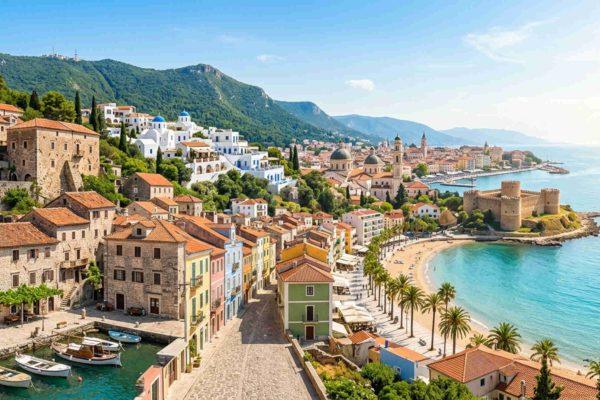
For retirees dreaming of sunny coasts, the Adriatic offers compelling options. Tirana, Albania's energetic capital, blends Ottoman and Italian architectural influences with a very affordable cost of living and a visa policy that allows Americans a one-year stay. Just north along the coast, Kotor, Montenegro is nestled within a breathtaking fjord-like bay. Its medieval old town, a UNESCO site, provides a storybook setting. Total monthly living costs here average around $1,300, enabling a life of exploring ancient city walls and enjoying local seafood in pedestrian-only squares.
This pursuit of a fulfilling life abroad resonates with many in our community who value deep cultural connections. For instance, the story of Sofía Vergara's Beverly Hills Home Renovation Blends European Elegance with Colombian Heritage shows how design and personal history can intersect across continents.
Southern European Culture and Ease
Portugal and Greece remain top destinations for their climate, cuisine, and established expatriate networks. Lagos, in Portugal's Algarve region, is known for its dramatic cliffs and Atlantic beaches. Portugal's D7 visa, designed for retirees and passive income earners, requires proof of just under $1,000 in monthly income, making it accessible for those on Social Security. Similarly, Chania on the Greek island of Crete offers a blend of Venetian harbor charm, a healthy Mediterranean diet, and high-quality universal healthcare.
In Italy, Cagliari, the capital of Sardinia, provides Italian dolce vita at a fraction of the cost of northern cities, with estimated monthly costs of $1,840 per person. Alicante, Spain seduces with its iconic Explanada de España promenade, tapas culture, and over 300 sunny days a year. Rounding out the list is Paphos, Cyprus, a coastal city rich in archaeological sites where a leisurely pace of life is the norm, supported by a safe environment and over 320 days of annual sunshine.
For those considering a change of scenery closer to home first, exploring Paradise Without a Passport: US Destinations You Can Visit with Just a State ID could be a useful first step.
This trend underscores a broader search for value and experience in later life. While these European cities offer financial ease, the true appeal lies in their distinct identities—from Bulgaria's ancient Thracian roots to Portugal's maritime history. For a bicultural audience familiar with navigating between worlds, the move represents not just a financial decision, but an opportunity for a new, deeply engaging chapter.