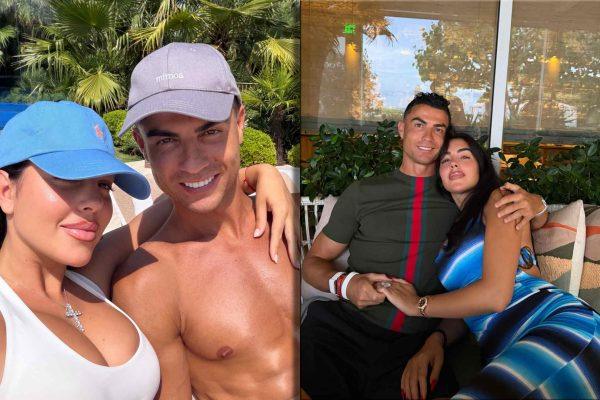
When Cristiano Ronaldo and Georgina Rodríguez finally tied the knot in a private ceremony in Madeira, the announcement was meant to be a quiet, elegant confirmation. The couple shared a single photograph—just their hands, intertwined, with simple gold bands—a gesture that felt intimate and restrained. But within hours, ESPN FC turned that moment into a digital controversy.
The sports network reposted the image with noticeable alterations: the hands looked aged and darkened, and an unrelated family photo was inserted into the background. Fans immediately flagged the changes, and the backlash was swift. What should have been a congratulatory post became a lesson in how not to handle a celebrity milestone.
A Misstep That Resonates Beyond Football
For many in the Latino community, Ronaldo and Rodríguez are more than just a global power couple. Rodríguez, a Spanish model and influencer, has built a following across Latin America, and their relationship has been followed closely from Madrid to the diaspora. The wedding itself was a culmination of years of shared life, and the couple's choice to keep it private was respected by most media. ESPN's edit felt like a violation of that trust.
Critics on social media called out the network for what they saw as a cheap attempt to manufacture engagement. The term "rage baiting" was thrown around, and for good reason. By introducing bizarre anomalies into a high-profile photo, platforms force users to pause, comment, and share—boosting the post in algorithmic feeds. But at what cost?
Media analysts note that this strategy risks alienating core audiences who expect objective sports coverage, not tabloid-style satire. "When you target an athlete with an unprecedented global following, you're not just poking fun at a celebrity—you're disrespecting millions of fans who see him as a symbol of perseverance and success," said one media commentator.
The incident also highlights a broader trend in digital media: the pursuit of virality over integrity. As outlets compete for clicks, the line between journalism and entertainment blurs. But as the backlash shows, audiences are increasingly savvy. They can spot manipulation, and they're not afraid to call it out.
For Ronaldo and Rodríguez, the wedding was a personal milestone, one they chose to share on their own terms. The couple's journey—from Madrid bus rides to a Madeira wedding—has been an open book, but this moment was theirs. ESPN's edit turned it into a spectacle, and fans were having none of it.
This isn't the first time a sports figure's personal life has been mishandled by the media. Earlier this year, Messi mourned his father's death, and Ronaldo sent heartfelt support, showing a rare moment of unity between rivals. That gesture was widely praised, a reminder that even the biggest stars are human. The contrast with ESPN's treatment of Ronaldo's wedding photo couldn't be starker.
Some might argue that the edit was harmless fun, a playful nod to the couple's fame. But for many, it crossed a line. The hands in the photo are a symbol of their union—aging them, darkening them, felt like a deliberate distortion of their love story. And the background image, which appeared to be a random family photo, added an element of mockery that fans found disrespectful.
The incident also raises questions about the role of social media in shaping public perception. As Ronaldo and Rodríguez finally marry after a decade together, the couple has navigated fame with grace, often sharing glimpses of their life with millions of followers. But this moment was different—it was a private celebration, and ESPN's intrusion felt like a breach of that privacy.
In the end, the controversy may be a blip in the news cycle, but it serves as a reminder to media outlets: respect the moments that matter to your audience. For Latino fans, who have watched Ronaldo and Rodríguez build a life together, this wedding was a celebration of love and family. ESPN's edit was a misstep, and the backlash was justified.
As the dust settles, one thing is clear: the power of fandoms is not to be underestimated. Whether it's Antonela Roccuzzo backing Georgina Rodríguez against body-shaming or fans defending Ronaldo's wedding photo, the message is the same—respect our icons, or face the consequences.