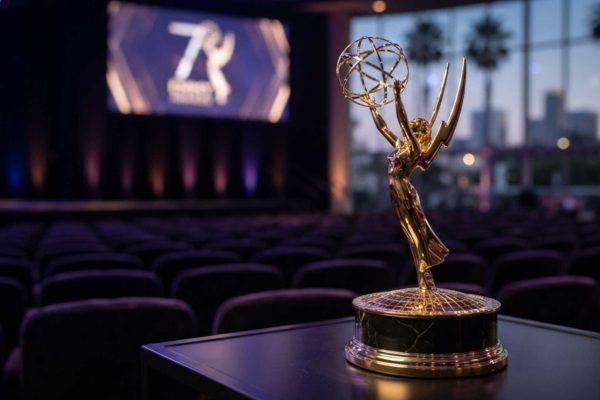
The 2026 Emmy Awards turned the Peacock Theater into the beating heart of television, a night where the industry's finest gathered to honor a year of daring narratives and standout performances. For Latino viewers across the Americas and the diaspora, the ceremony carried extra weight—not just for the trophies, but for the stories that resonated with our own experiences of family, resilience, and reinvention.
Mariska Hargitay, known for her decades on Law & Order: SVU, took the hosting reins with the warmth and gravitas she's become famous for. Her opening monologue set a tone that balanced reverence with a knowing wink at the absurdities of awards season. It was a homecoming of sorts: Hargitay had already moved audiences with her documentary about her mother, Jayne Mansfield, and her presence felt like a bridge between Hollywood's golden past and its streaming-driven present.
Historic wins and long-awaited coronations
The night's first major shock came when Jean Smart added an eighth Primetime Emmy to her collection, winning the comedy lead actress category. At a moment when comedy is being redefined by streaming platforms and bold voices, Smart's victory felt like a nod to the enduring power of sharp, character-driven humor. Her acceptance speech, equal parts witty and heartfelt, reminded us why she remains a beloved figure across generations.
Matthew Rhys, the Welsh actor who has quietly built a career of remarkable range, made history with a double win—taking home both lead actor in a drama and lead actor in a limited series. It was a rare feat that underscored the depth of his performances, and his quiet humility on stage only added to the moment's power.
But the most emotional win of the evening belonged to Rhea Seehorn. After years of acclaim for her work in Pluribus, she finally claimed the drama lead actress trophy. Tears streamed down her face as she thanked her collaborators and her family, a moment that felt like a collective exhale for everyone who had championed her work. For many in the audience, it was a reminder that persistence and craft do get recognized—eventually.
Laughter, tears, and a tribute that hit home
John Mulaney, serving as a presenter, brought his signature blend of self-deprecation and sharp observation, injecting the night with energy whenever the pace lagged. His jokes about the absurdity of award shows landed perfectly, a reminder that even in an industry obsessed with prestige, humor remains the great equalizer.
Tom Pelphrey moved millions when he dedicated his supporting actor trophy to his partner, Kaley Cuoco, and spoke openly about his journey with sobriety. His words were raw and honest, a rare moment of vulnerability that transcended the usual thank-you list. It was a reminder that behind the glitz, these artists are navigating real lives, with real struggles.
Stephen Colbert's long-running show received a farewell tribute that felt less like an ending and more like a celebration of a legacy. The variety category has been dominated by late-night hosts for years, but Colbert's brand of political satire and heartfelt interviews has left an indelible mark. The standing ovation he received was a testament to his impact.
The Bob Hope Humanitarian Award went to Michael J. Fox, whose foundation has been at the forefront of Parkinson's research for decades. His acceptance speech was a masterclass in grace under pressure, blending humor with a fierce determination to keep fighting. It was a moment that reminded everyone in the room—and watching at home—that some battles are bigger than television.
The traditional In Memoriam segment took on a folk-inflected tone this year, with Jamie Lee Curtis and Macaulay Culkin delivering heartfelt words between musical performances. It was a poignant reminder of the artists we've lost, and the segment was handled with the reverence it deserved.
For Latino viewers, the night also carried a quiet significance. While no Latin artist took home a major trophy this year, the presence of shows like Widow's Bay and The Pitt—both of which feature diverse casts and storylines that reflect our communities—signaled a shift in what television considers mainstream. The industry is slowly learning that our stories are not niche; they are universal.
As the credits rolled, the 2026 Emmys felt less like a competition and more like a family reunion. The wins were deserved, the speeches were memorable, and the moments of genuine emotion outweighed the predictable. For those of us who grew up watching television as a window into other worlds, it was a night that reaffirmed why we fell in love with the medium in the first place.