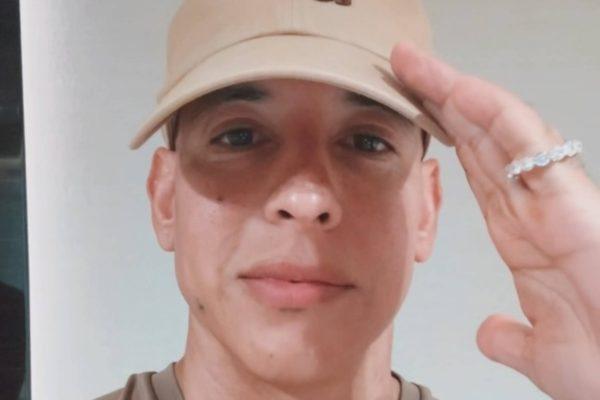
After a career that has defined reggaeton for three decades, Daddy Yankee is back with a project that feels less like a victory lap and more like a reinvention. La Postal, released today, is a 15-track conceptual album that trades the formulaic for the personal, with each song acting as a letter to the moments that shaped him. It's not just a comeback; it's a statement.
The album's lead single, "Pokito," featuring Punjabi star Diljit Dosanjh, is the clearest sign of Yankee's new direction. The track merges the syncopation of Puerto Rican reggaeton with the driving energy of bhangra, a fusion that feels both unexpected and natural. The collaboration came together after Dosanjh visited Puerto Rico, and the result is a sound that respects both traditions while pushing them somewhere new.
Global sounds, local roots
Yankee has always been a bridge builder, but La Postal widens the span. Beyond Dosanjh, the album features Cardi B on "Cosita," Bizarrap on "Pa' Que Llorar," and Danny Ocean on "Alfombra Voladora." Each collaboration brings a distinct texture—Cardi's Bronx bravado, Bizarrap's Argentine production wizardry, Ocean's Venezuelan pop sensibility—without diluting the album's core.
The production, overseen by Yankee's son Jeremy Ayala, keeps the bass heavy and the melodies sticky, but the lyrics dig deeper. Tracks like "Se Va" with Myke Towers and "Último Beso" explore heartbreak and closure with a maturity that comes from living through it. This isn't the carefree party music of Yankee's early days; it's the reflection of a man who has seen the industry change and has changed with it.
For fans who grew up with "Gasolina" and "Despacito," La Postal might feel like a departure. But it's also a homecoming. Yankee hasn't abandoned the streets; he's just expanded the map. The album's sonic palette draws from Africa and India, but the heartbeat remains distinctly Puerto Rican. It's a reminder that reggaeton was never a monolith—it's always been a conversation between cultures.
The album also arrives at a moment when Latin music is more global than ever. The Latin Grammys in Las Vegas recently honored Yankee alongside a new generation led by Rosalía, and La Postal feels like a deliberate handoff—not a retirement, but a passing of the torch to the artists who will carry the genre forward.
Yankee's influence extends beyond music. His recent restaurant opening in SoHo with Chef Jaime Pesaque shows he's thinking about legacy in multiple dimensions. But La Postal is the clearest statement yet: the Big Boss isn't just resting on his laurels. He's still taking risks, still experimenting, and still finding new ways to tell his story.
The album's title track, "La Gira," is a standout—a meditation on the road and the people left behind. It's the kind of song that only works when the artist has lived it, and Yankee's delivery is both weary and grateful. Similarly, "Rosa Live" and "Ghosting" show a playful side, but even those tracks carry a weight that comes from experience.
In an era where artists often chase viral moments, La Postal feels like a counter-programming move. It's an album meant to be listened to from start to finish, not just for singles. The sequencing is deliberate, the transitions smooth, and the emotional arc clear. Yankee is asking listeners to sit with him, to hear the whole story, not just the highlights.
For the bicultural Latino audience, La Postal is more than a music release. It's a cultural touchstone that acknowledges the diaspora's complexity—the way we hold multiple identities, languages, and rhythms at once. Yankee has always been a symbol of Puerto Rican pride, but with this album, he's speaking to a broader experience: the immigrant who carries home in their music, the kid who grew up between two worlds, the adult who's learned that healing is a process.
As the album closes with "Umami," a track that blends Japanese-inspired minimalism with reggaeton's pulse, it's clear that Yankee is still hungry. He's not done exploring, not done collaborating, not done proving that Latin music can absorb the world without losing its soul. La Postal is a masterclass in artistic evolution—and a reminder that the Big Boss still has plenty to say.