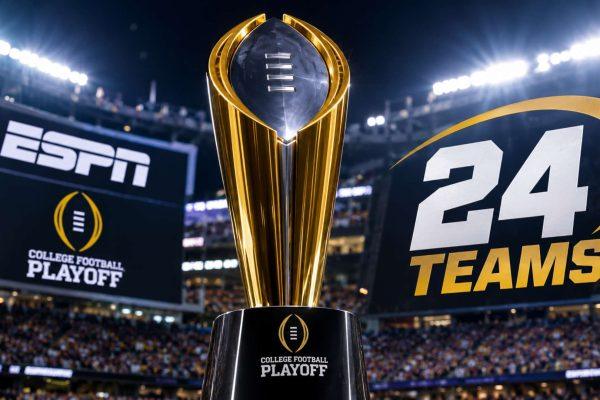
The College Football Playoff is set for a historic overhaul. Starting in the 2027 season, the postseason field will grow from its current format to 24 teams, thanks to a five-year media rights extension with ESPN valued at roughly $1.7 billion. That’s about $345 million per year, a significant jump from the current deal, and it locks in ESPN as the exclusive home of the playoff through 2031.
For fans across the United States—especially those in Latino communities where college football Saturdays are a family ritual—this change brings both excitement and a sense of loss. The expansion means more teams get a shot at the national title, but it also signals the end of a beloved tradition: conference championship games.
What the 24-Team Playoff Looks Like
Under the new structure, the regular season will wrap up by Thanksgiving weekend. Then, in December, the playoff begins with 16 first-round games hosted on campus. That’s a major shift from the current setup, where most playoff games are played at neutral sites. Campus games will bring the electric atmosphere of college football directly to students and local communities, a move that many players and coaches have long advocated for.
After the opening rounds, the tournament moves to traditional New Year’s bowl games, culminating in a national championship game in New Orleans. The city, with its deep cultural ties to Latin music and food, will host the title game in the first year of the new format—a fitting stage for a sport that thrives on passion and pageantry.
The End of Conference Championship Weekend
One of the most significant casualties of this expansion is the conference championship games that have been a staple of early December for decades. Leagues like the SEC, Big Ten, and Big 12 will no longer hold their title games, as the playoff schedule takes over that window. The decision was made to protect student-athlete welfare and to fit the expanded bracket into the calendar.
In place of conference titles, the selection committee will pick the 24 teams, guaranteeing automatic bids for the champions of the major conferences and filling the rest with at-large selections based on weekly rankings. This could lead to more diversity in the field, giving programs from smaller conferences a chance to compete on the biggest stage.
Financial Impact and the Future of College Sports
The financial implications are enormous. The new deal injects hundreds of millions of dollars annually into college athletics, and that money will flow to athletic departments and conferences across the country. University administrators argue that this stability is essential for the long-term health of their programs, especially as the landscape of college sports continues to evolve with NIL deals and conference realignment.
For college towns, the expanded playoff means more home games in December, which translates to a boost in local economies. Hotels, restaurants, and bars will see increased business as fans travel to campus for these high-stakes matchups. It’s a win for communities that have long been the heart of college football culture.
But not everyone is celebrating. Some traditionalists worry that the elimination of conference championship games diminishes the regular season and devalues conference rivalries. Others point out that the playoff expansion could lead to more blowouts in early rounds, as lower-seeded teams face powerhouse programs.
Still, the momentum is undeniable. The College Football Playoff is following the trend of other sports, like basketball, where expanded fields have become the norm. And with ESPN’s deep pockets, the playoff is poised to become an even bigger cultural event.
For Latino fans, this change is part of a broader evolution in American sports. Just as Cristiano Ronaldo's massive earnings have reshaped global football, this deal will reshape college football’s economics. And while the sport has traditionally been dominated by Anglo-American narratives, the growing Latino presence in college towns and in the stands is undeniable.
As the 2027 season approaches, fans will have to adjust to a new rhythm. No more conference title games on the first Saturday of December. Instead, the playoff will take center stage, with campus stadiums hosting the opening rounds. It’s a bold new era, and one that promises to bring more teams, more drama, and more opportunities for student-athletes.
Whether you’re a die-hard fan of a powerhouse program or a supporter of a mid-major school, the 24-team playoff is a game-changer. And with New Orleans hosting the first championship, the Latino influence on the sport will be on full display, from the music in the stands to the food in the tailgates.
This is more than just a scheduling change—it’s a cultural shift. College football is evolving, and the playoff expansion is leading the way.