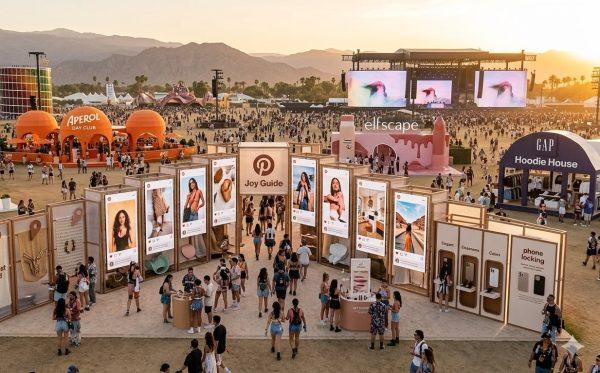
What started in 1999 as a countercultural gathering for rock and pop fans has transformed into something far bigger. Coachella 2026 isn't just a music festival—it's a sprawling marketing ecosystem where over 250,000 attendees wander the Empire Polo Club, and brands compete not for attention, but for belonging. In the California desert, companies have learned that selling a product is secondary; what matters is selling an identity.
Walking through Coachella's nine stages today means navigating a landscape where brand activations rival headliners in prominence. Fashion, beauty, and beverage companies have designed spaces that go far beyond traditional advertising. They're building miniature worlds—part amusement park, part oasis—where every interaction feels personal.
From Lip Balm to Lifeline
A standout example is e.l.f. Cosmetics. Their e.l.f.scape to the Desert Balm campaign didn't just offer lip products; it solved a real problem: extreme heat. Between slushies, makeup touch-up stations, and donut-shaped seats designed for the perfect photo, the brand became an ally to the attendee. As e.l.f. executives note, 92% of makeup users integrate lip products into their daily routine, and Coachella served as the ideal stage to capitalize on that reality. It's a shift from interruption to integration—marketing that feels like a service.
This approach resonates deeply with a bicultural audience that values authenticity. For Latinos, who often navigate multiple identities, a brand that understands real needs—like staying cool while looking good—earns trust. It's no surprise that acts like Karol G and Peso Pluma turned Coachella into a Latin music milestone, drawing crowds that expect brands to speak their language, literally and culturally.
The Analog Paradox in a Digital Age
In a festival often called the "influencer Olympics," where the competition for the perfect photo is fierce, Pinterest took a surprising turn. The inspiration platform installed a phone-free zone—a quiet rebellion against digital fatigue. Amidst debates over screen time, this analog experience invited attendees to disconnect and rediscover human interaction. The strategy doesn't seek immediate virality; it aims to build long-term loyalty with Generation Z, which already represents half of Pinterest's audience. Sometimes, the best way to stand out is to ask users to put the device down.
This move mirrors a broader cultural shift. As TIME 100 2026 spotlights Latino leaders and cultural titans, it's clear that younger generations value experiences over possessions. Brands that offer moments of genuine connection—whether through a shared slushie or a silent conversation—win the day.
Coachella as Cultural Destination
The success of this model lies in Coachella positioning itself as a cultural destination, not just a concert. For brands like Absolut, with their Absolut Heat Haus, the festival serves as an energetic social occasion where music is merely the vehicle. By recreating private clubs with renowned DJs, brands offer the oasis attendees need after hours under temperatures exceeding 30°C. It's about creating a tribe—a sense of belonging that extends beyond the weekend.
This tribal dynamic is especially potent for Latino audiences, who often gather around shared cultural touchpoints. When Coachella 2026 hit $200 million in revenue as Karol G made headline history, it signaled that Latin music and culture are now central to the festival's identity. Brands that ignore this shift miss the point.
For today's audience, the value of Coachella resides not just in the concerts, but in belonging to a community that lives and consumes culture in real-time. Brands have stopped being distant sponsors; they've become architects of memories. By integrating marketing with basic human needs—shade, air conditioning, hydration, and social validation—the festival has redefined what it means to be a relevant brand in the 21st century. And in a world where attention is the scarcest resource, that's the ultimate win.