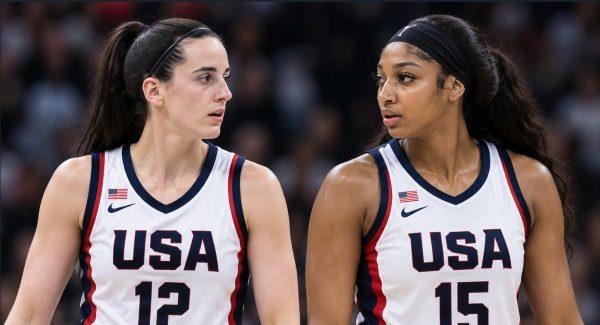
For years, Caitlin Clark and Angel Reese have been linked by rivalry, by draft class, by the way their names appear in headlines. But at the 2026 FIBA Women's Basketball World Cup in Berlin, they finally wore the same jersey. Team USA took home the gold, and the two stars who usually compete against each other found themselves on the same side of the box score.
The tournament didn't settle the debate—it made it richer. Clark averaged 7.8 points, 5.3 assists, and 2.2 rebounds per game. Reese put up 7.2 points, 5.0 rebounds, and 0.7 assists, while adding 1.2 steals and 0.8 blocks. The most striking gap: Reese shot 59.1% from the field, Clark 35.9% overall and 28% from three. Yet Clark's passing was a different kind of weapon, and her final-game heroics shifted the conversation.
Reese's efficiency and interior impact
If you value efficiency and two-way presence, Reese made a strong case. She converted 13 of her 22 field-goal attempts, rarely forcing shots, and her work on the glass and on defense was steady. Before the final, FIBA's stats had her among Team USA's leaders in rebounds, steals, blocks, and overall efficiency.
Her best outing came against Czechia, where she scored 13 points on 4-of-5 shooting and grabbed six rebounds. In the quarterfinal against Hungary, she filled the stat sheet with nine points, six boards, three assists, two steals, and a block, shooting 4-of-5. That kind of quiet production is exactly what coaches want from a role player on a star-studded roster.
Clark's shooting was more volatile. She exploded against China with 14 points and 11 assists, but then went 0-for-6 against Italy, scoring just one point. She also went scoreless from the field in the semifinal against Spain. Still, her vision set her apart—she finished with 29 assists through the semifinal, among the tournament's best.
The final flips the script
The gold-medal game changed the narrative. With Team USA down 14 against France, Clark hit a crucial three just before halftime to cut the deficit to two. She finished with 12 points on 4-of-5 shooting, including 2-of-3 from beyond the arc, as the Americans stormed back to win 97-79. Reuters highlighted her halftime three and another triple that helped stretch the lead in the second half.
Reese contributed three points and solid interior minutes off the bench, but the final was clearly Clark's stage. Breanna Stewart was the real star, scoring 22 points and earning tournament MVP honors, but Clark's timely shooting was a key part of the comeback.
So who was better? The fairest answer is that Reese had the more efficient tournament, while Clark had the greater playmaking impact. Reese averaged nearly the same points in fewer minutes, shot almost 60% from the floor, doubled Clark's rebounding, and added more steals and blocks. Clark countered with nearly eight times as many assists per game and created an offensive dimension that Reese isn't asked to provide.
If you're choosing purely on the full statistical profile, Reese gets a slight edge in individual efficiency, Clark in offensive importance. And if the question is who finished stronger, Clark wins that argument after delivering 12 points and two big threes in the gold-medal game.
Perhaps the most revealing outcome is that the World Cup turned Clark vs. Reese into Clark and Reese. For the first time on this stage, their numbers didn't have to compete for the same victory. They both left Berlin as world champions, and that's a win for both of them—and for anyone who loves the game.