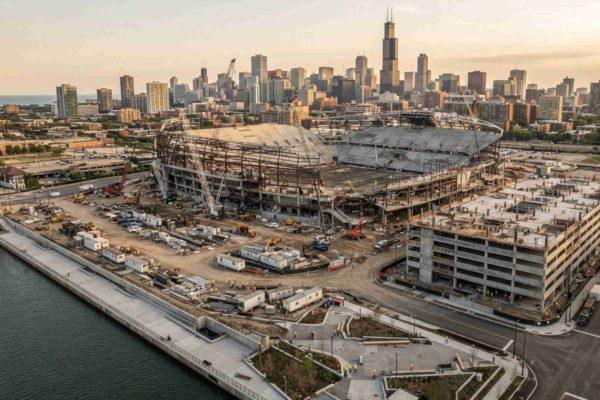
The Chicago City Council has approved a $424.9 million tax-increment financing (TIF) package to fund roadwork, utility connections, and a river wall for the new Chicago Fire stadium in the South Loop. While the team’s owners insist the $750 million stadium itself is privately funded, Chicago residents will shoulder the cost of the surrounding infrastructure—a move that has ignited debate across the city.
A Parking Garage at the Center of Controversy
One of the most contentious elements of the plan is a city-owned parking garage. Alderman Daniel La Spata warned that current projections suggest it would take nearly 50 years for the city to recoup its investment—a timeline that exceeds the typical lifespan of a stadium. “We’re essentially betting on a structure that may outlive its own utility,” La Spata said during the council session.
Alderman Pat Dowell defended the project, arguing that the garage design includes space for housing and retail. She claimed these additions would generate extra revenue through property and sales taxes, along with advertising opportunities, helping to justify the expense. Still, critics remain unconvinced, pointing to similar deals across the U.S. where public infrastructure costs have ballooned without delivering promised returns.
The Broader Trend in Sports Financing
This financing strategy reflects a growing pattern in American sports: team owners claim to build their own stadiums while shifting the costs of essential external infrastructure onto the public. Neil deMause, an expert on stadium economics, explained that this agreement involves moving TIF funds from neighboring districts, suggesting the initial budget for urban development lacked sufficient capital to cover the project’s ambitions.
With an opening date set for 2028, Chicago residents are scrutinizing every detail. The debate echoes similar controversies in other cities, where public funds have been used to support private sports ventures. For context, Lionel Messi's Inter Miami contract shows how massive private investments can reshape a team’s fortunes, but here the burden falls squarely on taxpayers.
Meanwhile, the Chicago Fire’s new home is being hailed as a first-of-its-kind stadium in the U.S., designed to host both soccer and other events. But for many Latino fans—who make up a significant portion of the city’s soccer-loving community—the question remains: who really pays for the dream? As Julián Quiñones' $200 million release clause highlights the soaring costs in soccer, this stadium deal underscores a different kind of financial reality.
The city’s decision also raises broader questions about public investment in sports infrastructure. In a time when New York has halted large data centers to protect residents from rising electricity costs, Chicago’s move seems to prioritize a stadium over other community needs. The TIF mechanism, designed to spur development in blighted areas, is now being used to support a project that some argue benefits private interests more than the public.
As the debate continues, the Chicago Fire’s future home represents both a promise of revitalization and a cautionary tale about the true cost of sports ambition. For now, Chicagoans are left to weigh the potential benefits against the long-term financial burden.