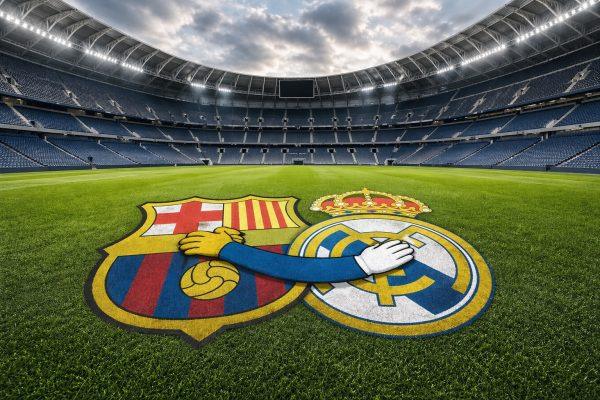
For the first time in years, Barcelona and Real Madrid find themselves in the same boat — not as rivals celebrating each other's misfortune, but as two institutions staring into the same mirror of necessity. Both were knocked out of the Champions League at pivotal stages, and while LaLiga still demands their attention, the real work begins in the front offices. The summer of 2026 isn't just about transfers; it's about redefining what these clubs want to be.
Barcelona: Between Style and Pragmatism
Hansi Flick's Barcelona is a team of contradictions. On one hand, they've produced a generation of young talent that excites fans from México to Buenos Aires. On the other, they remain fragile against Europe's elite. Flick's 4-2-3-1 system demands relentless high pressing, but Robert Lewandowski, now nearly 38, can no longer lead that charge. The Polish striker's time at Camp Nou may be reaching its natural end. If Barça wants to compete in the Champions League again, they need a forward who can both score and press — a profile that doesn't currently exist in their squad.
Defensively, the problem is even more glaring. Barcelona has lacked a fast, aggressive, left-footed center-back for years, and it cost them avoidable goals in Europe. To fund such a signing, the club will have to make tough choices. Selling an asset like Frenkie de Jong could be the key to balancing the books under Financial Fair Play rules. As we explored in Barcelona's 2026 Rebuild: Five Key Exits to Watch as Club Charts New Course, the club's financial reality means that every big move requires a sacrifice. With talents like Pedri and Lamine Yamal, the foundation is there, but it's incomplete for the highest level.
Real Madrid: The End of an Era
The crisis at the Santiago Bernabéu runs deeper. Beyond tactics, there's a feeling that an era is closing. The departures of generational figures like Toni Kroos, Luka Modrić, and Nacho, combined with uncertainty around the manager's future, have left the club in a state of institutional drift. Real Madrid doesn't just need new players; they need a coherent vision. The tactical puzzle of fitting Vinícius Júnior and Kylian Mbappé together remains unsolved, and the squad looks physically and mentally exhausted.
This summer must be an exercise in humility for the board. Reconstruction can't rely solely on star names. Whether the next coach is Mauricio Pochettino or José Mourinho, the club needs a renewed structure that brings discipline and coherence — qualities that have been noticeably absent this season. As Champions League Semifinals: How History Shapes the 2026 Contenders reminds us, history shows that even the biggest clubs must rebuild from the ground up.
The Mirror of Necessity
For Barcelona, the danger is complacency. With a nine-point lead in LaLiga, it's easy to believe the margin for error is larger than it is. But the reality is that both clubs need each other to be strong. The historic rivalry that defines Spanish football is what pushes both to raise their standards. If they don't use this summer to fix their structural deficiencies, the gap between them and the Premier League giants will only widen.
This isn't just about signing a striker or a center-back. It's about making existential decisions. The crisis is shared, and redemption must begin at home. For Latino fans who grew up idolizing Ronaldinho, Raúl, or Messi, watching these clubs struggle is painful. But it's also a reminder that football, like life, is cyclical. The question is whether Barcelona and Real Madrid have the courage to face their own reflections and rebuild properly.