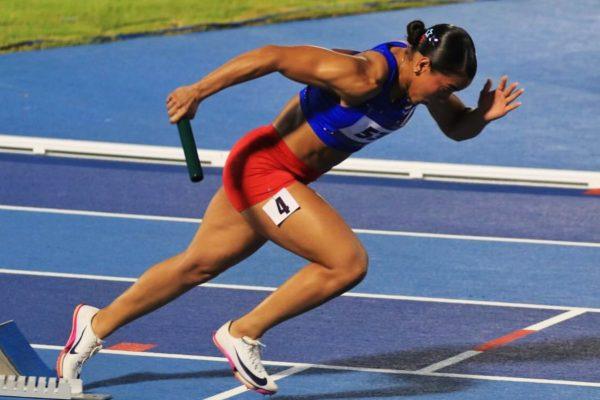
For Puerto Rican sprinter Adanelys Rodríguez, the Santo Domingo 2026 Central American and Caribbean Games were never just about medals. Born in San Juan to a Puerto Rican mother and a Dominican father from Barranquito, Nagua, Rodríguez had always carried a deep sense of connection to her paternal roots. But it wasn't until she stepped onto the track at the Juan Pablo Duarte Olympic Stadium that those roots became tangible.
Rodríguez claimed a silver medal in the women's 4×100 relay, a proud moment for the 24-year-old athlete. Yet the true highlight came moments later, when she embraced her Dominican siblings in person for the very first time. After years of video calls and messages, the reunion transformed a professional milestone into a personal triumph.
A Carefully Planned Surprise
The meeting was orchestrated by her father, who, though unable to travel due to work, arranged for his children to attend the competition. As Rodríguez prepared to enter the staging area, she heard her brother call her name from the stands. The sound triggered an overwhelming wave of emotion, turning years of digital connection into a living memory.
“It was like a dream,” Rodríguez later shared, her voice still carrying the joy of that moment. “I had imagined this so many times, but nothing compares to actually seeing them, hugging them, hearing their voices in person.”
The reunion was brief—the competition schedule left little room for extended visits—but it was enough to fill her heart. Rodríguez described the experience as “a gift that goes beyond any medal,” and she made sure to savor every second.
Pride in a Binational Identity
Rodríguez has always embraced her dual heritage. She grew up listening to stories of the Dominican countryside, tasting dishes like mangú at family gatherings, and feeling a pull toward the island her father called home. Competing in Santo Domingo, she said, felt like “running on sacred ground.”
The local crowd embraced her as one of their own, and she felt their warmth throughout the Games. “The people here have been incredible,” she said. “They cheered for me as if I were Dominican, and that meant the world to me.”
As one of ten siblings spread across Puerto Rico, New York, and the Dominican Republic, Rodríguez knows the importance of family bonds. She wore the Puerto Rican uniform with pride, but she carried her father's homeland in her heart. The experience has deepened her appreciation for the cultural bridge she represents—a bridge that, for many in the diaspora, is both personal and political.
From Classroom to Track
Rodríguez's journey to elite athletics began at age 10, when a physical education teacher spotted her natural speed and encouraged her to join a local track club. She quickly rose through the ranks, but she never neglected her education. She earned a bachelor's degree in nursing and later a master's in sports training, balancing rigorous academic demands with early-morning workouts.
Her mother has been her constant support, and her faith has guided her through the challenges of professional sport. “I believe God has a plan for me,” Rodríguez says. “This medal, this reunion—it's all part of that plan.”
Her story resonates with many young athletes who see sport as a pathway to opportunity. It also echoes the experiences of other Latino athletes who have used their platforms to reconnect with their roots, much like Puerto Rico's global icons who have carried their heritage into the spotlight.
Looking Ahead
With the silver medal secured and her family connection firmly established, Rodríguez is already planning a return trip to the Dominican Republic—this time without the constraints of a competition. She wants to spend quality time with her siblings, visit her father's hometown, and simply be present in the place that has always felt like a second home.
Her performance in Santo Domingo is a testament to how sport can serve as a bridge between cultures and families. It also highlights the growing presence of Puerto Rican athletes in regional competitions, a trend that continues to inspire pride across the island.
As she prepares for upcoming international events, Rodríguez carries with her the love and support of a family that spans two islands. “I run for Puerto Rico,” she says, “but I also run for my father, for my siblings, for all of us who carry two flags in our hearts.”
Her story is a reminder that behind every medal lies a human narrative—one of sacrifice, identity, and the enduring power of family. For Rodríguez, the silver around her neck is more than an athletic achievement; it is a symbol of the bonds that distance cannot break.