When the 2026 World Cup kicks off across the United States, Canada, and Mexico, one voice will once again define the tournament's soundtrack: Shakira. The Colombian superstar is set to release the official anthem for the 2026 edition, adding another chapter to a legacy that has reshaped how the world hears football.
Shakira's relationship with the World Cup is unlike any other artist's. It began in 2006 in Germany, where she performed a special version of "Hips Don't Lie" (Bamboo) alongside Wyclef Jean during the closing ceremony. That moment introduced millions to her fusion of Latin pop and global rhythms, but it was just the start.
The Anthem That Changed Everything
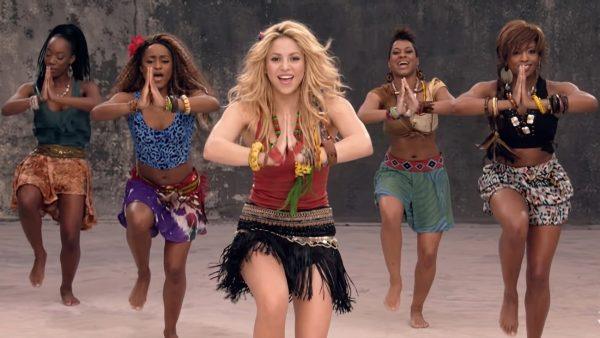
In 2010, while vacationing at her estate in Uruguay, Shakira wrote "Waka Waka (This Time for Africa)" for the South Africa tournament. She recalls the melody and English lyrics coming to her almost instinctively as she walked through the property, feeling a deep connection to her Afro-Caribbean roots. She immediately called her record executives, convinced she had written the ultimate anthem.
The track, produced with John Hill, gained a unique cultural identity after a chance meeting in New York with South African fusion group Freshlyground. Their contribution honored the host nation, while the music video featured global icons like Lionel Messi and Gerard Piqué. The song became the most successful World Cup anthem ever, amassing over 4.4 billion views on YouTube. Its impact was so lasting that Shakira performed it a decade later during the Super Bowl LIV halftime show alongside Jennifer Lopez.
For the 2014 World Cup in Brazil, she released "La La La" with Brazilian musician Carlinhos Brown, further cementing her role as FIFA's musical talisman. Each anthem captured the spirit of the host country while showcasing her signature dance moves and a vibrant sample of the Cameroonian classic "Zamina Mina (Zangaléwa)".
A Legacy Built on Latin Roots
Shakira's success is part of a broader tradition of Latin artists transforming the World Cup into a platform for cultural impact. The tradition of official anthems began in Chile in 1962 with Los Ramblers' "El Rock del Mundial", but the commercial explosion came in France 1998. That year, Puerto Rican icon Ricky Martin released "The Cup of Life" ("La Copa de la Vida"), a track fueled by horns and Brazilian batucada that dominated charts and sparked the "Latin explosion" in the United States after a historic Grammy performance.
More recently, urban stars like Ozuna shone with "Arhbo" during Qatar 2022, proving that Latino music continues to dominate global platforms. Each tournament becomes an indelible cultural showcase, and Shakira remains at the forefront.
Her 2026 anthem promises to capture the multicultural identity of a tournament spanning three nations. As she returns at the top of her game, Shakira proves that nobody understands football adrenaline quite like her. For fans across the Americas and the diaspora, her music is more than a soundtrack—it's a celebration of shared heritage and passion.
Read more about Shakira letting US fans pick her World Cup tour setlist, and check out how her 'Dai Dai' World Cup outfit was made in just four days.