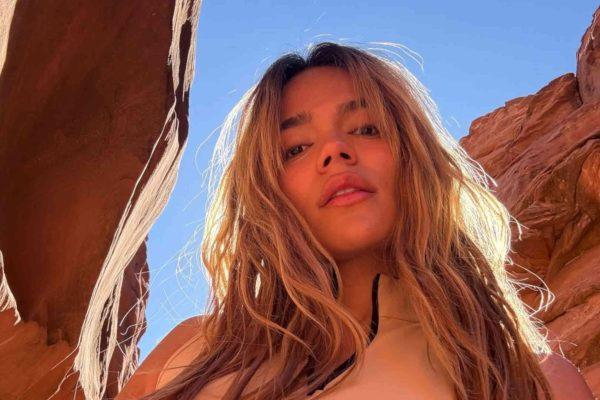
For Dominican singer-songwriter Pamé, music is more than melody and rhythm—it's a vessel for heritage, identity, and change. Growing up on the U.S. East Coast after immigrating from the Dominican Republic, she has consciously woven the threads of her culture into every facet of her art. Her work stands as a vibrant challenge to narrow narratives, insisting on the rich, diverse reality of Afro-Latino identity.
From Stage to Studio: Forging a Unique Path
Pamé's artistic foundation was built in musical theater, which honed her commanding stage presence and deep understanding of narrative. Yet, she quickly felt constrained by the industry's conventional lanes for artists of her background. "I didn’t want to fit into the industry’s expectations," she reflects, describing a conscious move away from standard R&B and reggaeton formulas. Her mission became clear: to craft a sound unmistakably and authentically her own.
That pursuit led her to Los Angeles, where she initially worked in music public relations. Surrounded by the mechanics of the industry, she still felt a creative void. It was her mother's pivotal encouragement that propelled her to leap fully into her music career. "If you’re going to dream, dream big," her mother advised, words that continue to fuel Pamé's ambitious vision.
Art with a Purpose: Community and Representation
Pamé's drive extends far beyond the recording studio. Her commitment to community was forged in moments of crisis, like volunteering with her mother at 4 a.m. to feed families displaced by the Los Angeles wildfires. This experience cemented her belief that an artist's platform must serve a purpose greater than personal success.
Central to her work is a mission to dismantle the monolithic image of Latino identity. "There are darker-complexion Latinos, and we need to be seen," she states emphatically. By centering her Afro-Latina experience in her music and visuals, she actively expands mainstream representation, ensuring these narratives are celebrated. This focus on authentic storytelling connects her to a broader movement of artists, like Rosalía, who are also honored for reshaping Latin music on their own terms.
Her goals are as grand as her purpose. Pamé aims to achieve the rare LGOT distinction—winning a Latin Grammy, Grammy, Oscar, and Tony. For her, these accolades are not merely trophies but proof points, demonstrating what's possible when an artist remains uncompromisingly true to their roots and vision.
In an industry often seeking formulaic hits, Pamé's journey is a testament to artistic integrity. She joins a powerful cohort of Latina changemakers making waves across fields, from the tennis stars highlighted in Latina Power on the Court to veterans of the stage and screen. Her story is one of resilience, a quality that resonates deeply within many Latino households navigating their own paths, much like those planning for retirement with determination.
With a fearless approach and profound authenticity, Pamé is redefining what it means to be a Latin music artist today. She is a storyteller for a new generation, using her voice to ensure the underrepresented are not just heard, but are central to the cultural conversation.