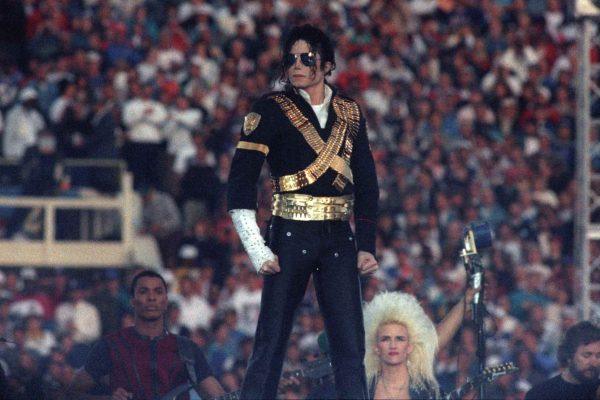
On January 31, 1993, the Rose Bowl in Pasadena hosted Super Bowl XXVII, where the Dallas Cowboys claimed victory. But the real game-changer happened during halftime. Before that night, the Super Bowl halftime show was a forgettable interlude—college marching bands and variety acts that sent viewers to the kitchen. The NFL, desperate to keep eyes on the screen, took a gamble on the biggest star on the planet: Michael Jackson. The result was historic, drawing ratings that surpassed the game itself and transforming halftime into the most coveted advertising slot on American television.
The Power of Silence and a Legendary Entrance
Jackson’s performance was revolutionary from the first second. Using body doubles, he appeared to materialize atop the stadium’s giant screens before catapulting onto the main stage. Once there, he stood motionless for 90 seconds while 100,000 fans screamed. It was a masterclass in suspense and stage presence—a move no one has successfully replicated since. His precise choreography in hits like “Billie Jean” and “Black or White” raised the production bar to cinematic levels, forcing future artists to invest millions into their own shows.
This wasn’t just a concert; it was a spectacle that proved the Super Bowl could host the biggest concert on Earth. Without Jackson, the halftime show as we know it—a platform for legends like Prince, Beyoncé, and The Rolling Stones—would not exist. For more on Jackson’s legacy, see Conrad Murray: Michael Jackson's Doctor Rebuilds His Life in Trinidad and Tobago.
A Global Message: 'Heal the World'
The climax came with a massive rendition of “Heal the World.” The field was covered by a giant mosaic drawn by children, and a massive inflatable globe rose at center stage. This humanitarian focus reinforced Jackson’s image as a figure transcending music and established the tradition of using the Super Bowl as a platform for unity and social change. That day, the NFL realized halftime was no longer a break—it was a global cultural event capable of captivating the world for 12 minutes.
Jackson’s message of peace remains the gold standard for any artist stepping onto the NFL stage. More than three decades later, his performance is still considered the most important in Super Bowl history. For context on Jackson’s later years, check out Bubbles the Chimp Didn't Inherit Millions, But Michael Jackson's Estate Still Covers His Care.
Is It Still the Most Watched Performance?
In terms of relative impact and paradigm shift, critics still rank Jackson’s show as number one. While artists like Rihanna and Katy Perry have achieved higher digital viewership in the streaming era, the 1993 show holds the record for being the first to actually increase the audience during the break. It was the spectacle that proved the Super Bowl could be the biggest concert on Earth, paving the way for legends like Prince, Beyoncé, and The Rolling Stones. Without Michael, the Halftime Show simply would not be what it is today.
For more on Jackson’s cultural footprint, see The Michael Jackson Biopic Leaves Out Key Stories: From Captain EO to the Beatles Feud and Neverland Ranch: From Michael Jackson's Fantasy to Biopic Set.