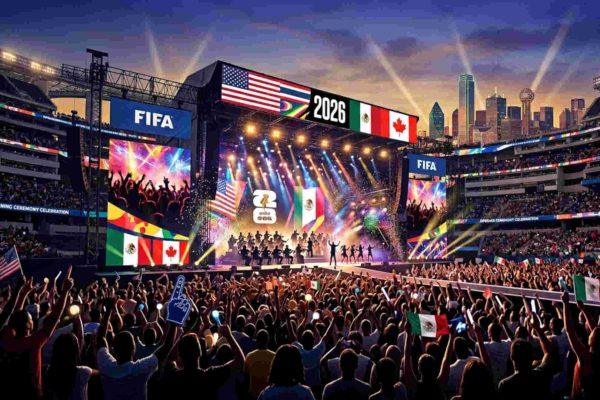
FIFA has confirmed the musical lineup for the opening ceremonies of the 2026 World Cup, a tournament that will be co-hosted by the United States, Mexico, and Canada. The celebrations promise to blend global pop with the rich sounds of Latin America, marking a historic moment for the region's cultural influence on the world stage.
On June 11, Mexico City's legendary Estadio Azteca will host the tournament's first match between Mexico and South Africa. The pre-game show will feature Colombian reggaeton star J Balvin, Mexican rock icons Maná, and pop singer Belinda. This ceremony will kick off 90 minutes before kickoff, placing Mexican culture at the forefront of the event. The Azteca, which has already hosted two World Cup finals, will once again be the epicenter of football and music.
A Tri-Nation Celebration of Music and Sport
The following day, June 12, SoFi Stadium in Inglewood, California, will become the stage for the United States' debut against Paraguay. Headlining the show will be Katy Perry, joined by Brazilian pop star Anitta and rapper Future. This performance is expected to draw a massive global audience, showcasing a mix of pop, hip-hop, and Brazilian funk. For the Latino community in the US, this moment is particularly significant: it recognizes the massive influence of Latin music on American culture, a trend that has been growing for years. As Bad Bunny leads Latin artists in Spotify's rankings, the inclusion of Anitta and J Balvin in these ceremonies underscores the genre's global reach.
Toronto's BMO Field will offer a distinctly Canadian flavor on June 12, with Alanis Morissette and Michael Bublé headlining before Canada's first match. The lineup also includes Alessia Cara and Jessie Reyez, representing the country's diverse musical landscape. FIFA has emphasized that each venue will have its own unique identity, ensuring that the ceremonies reflect the distinct cultures of the host nations.
The inclusion of indigenous and folkloric talent across all three countries will further ground the event in authenticity. This approach ensures that the World Cup remains a celebration of roots and modernity, rather than just a commercial spectacle. For Latinos across the Americas, this is a moment of pride: our music, from banda to reggaeton, is being elevated on the world's biggest stage.
This year's ceremonies also highlight the growing trend of Latin artists headlining major global events. Shakira's recent 2-million fan show at Copacabana set a new standard for what Latino artists can achieve, and the 2026 World Cup lineup continues that momentum. The diversity of sounds—from Maná's rock to J Balvin's reggaeton—reflects the complexity of Latin American music, which is far from a monolith.
For the diaspora, this World Cup is more than just a tournament; it's a recognition of our place in North America's cultural fabric. As the US, Mexico, and Canada come together, the ceremonies will serve as a reminder that our heritage is not just celebrated but integral to the identity of the entire continent.