Football is about to see a major shift in how on-field disputes are handled, and it all starts with a gesture many players use without thinking: covering the mouth. The International Football Association Board (IFAB) has ratified a change to the laws of the game that will debut at the 2026 World Cup, hosted across North America and México. Starting this summer, any player who deliberately hides their lips with a hand or jersey during a heated exchange could be shown a straight red card.
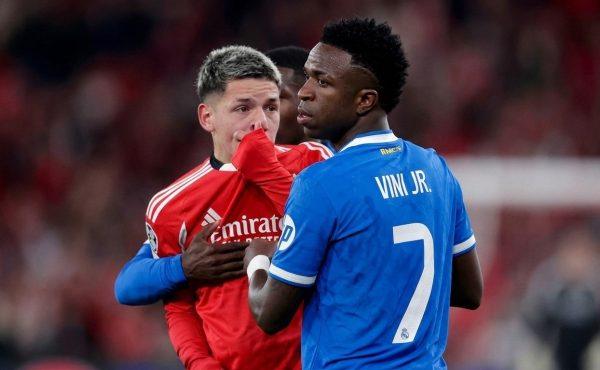
The rule, which fans have unofficially dubbed the “Vinicius Jr. Rule,” traces its origins to a Champions League match between Real Madrid and Benfica early in the 2025/26 season. During a knockout game in Lisbon, Benfica’s Gianluca Prestianni covered his mouth with his jersey while speaking to Vinicius Jr. The Brazilian immediately alerted the referee, triggering the protocol against racist abuse and halting the match for ten minutes. Though Prestianni denied any racist intent, a UEFA investigation found him guilty of homophobic conduct, resulting in a six-game ban. That incident became the catalyst for FIFA to push for greater transparency in player communication.
What the New Rule Means for Players
Under the updated regulation, referees have the authority to issue a red card if they believe a player is covering their mouth to hide insults or discriminatory language. FIFA President Gianni Infantino made the stance clear: “If you have nothing to hide, you don’t cover your mouth when speaking.” The rule essentially creates a presumption of guilt—if a player hides their lips during an argument, the official will assume something improper was said. However, IFAB has emphasized that the final call rests on the referee’s judgment, who must assess the context before sending a player off.
This isn’t the only measure aimed at curbing indiscipline at the 2026 World Cup. FIFA is also introducing stricter rules to combat dissent and chaos on the pitch. Players who leave the field to protest a decision will be immediately expelled, a response to the mass protests by Senegal’s national team during the recent Africa Cup of Nations final. Additionally, officials will increase surveillance of gestures and words to protect referees during high-tension moments.
For Latino fans, this rule hits close to home. Vinicius Jr., a Brazilian star who has faced repeated racist abuse in Spain, has become a symbol of the fight against discrimination in football. His experience underscores the need for measures that ensure players can speak freely without fear of retaliation—or, in this case, hide their words. The rule also reflects a broader push across Latin America to address racism and homophobia in the sport, from stadiums in Buenos Aires to leagues in México City.
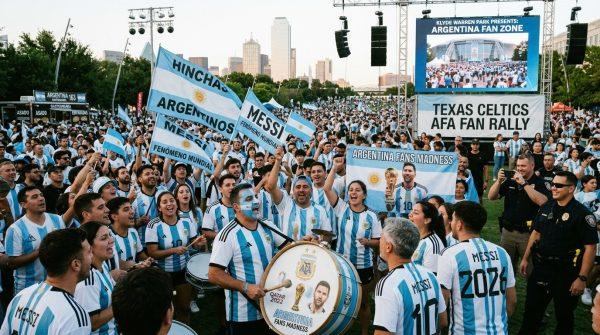
As the 2026 World Cup approaches, teams from across the Americas—including Argentina, Brazil, Uruguay, and Colombia—will need to adapt quickly. The rule could change how players communicate during tense moments, especially in high-stakes matches where emotions run high. For a tournament that will feature matches in cities like Los Angeles, Houston, and México City, the emphasis on transparency and respect aligns with the values of many Latino communities who see football as more than just a game.
While some critics argue the rule could lead to unfair expulsions, FIFA insists it’s a necessary step to eradicate the gray areas of sporting behavior. As Infantino put it, the goal is to ensure the World Cup remains a showcase of respect and fair play, with every word and gesture visible to cameras and officials. For Vinicius Jr. and countless other players, that visibility might just be the most powerful tool yet.