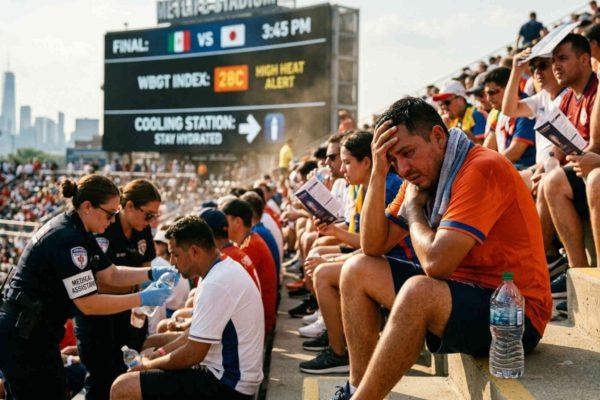
As the 2026 World Cup approaches, scientists are raising urgent concerns about extreme heat risk at key venues across the United States, particularly MetLife Stadium in New Jersey, which will host the tournament final. The danger isn't just about high temperatures—it's about the wet-bulb globe temperature index, a metric that combines solar radiation, humidity, and wind to measure the real impact on the human body. According to experts from World Weather Attribution, this index shows that conditions have worsened by 30 percent compared to the last World Cup held in North America.
The combination of heat and moisture creates thermal stress that can severely affect players' performance and health. When the body can't cool itself through sweat evaporation, the risk of dehydration, heat stroke, and other heat-related illnesses spikes. For fans lining up outside stadiums or sitting in open-air stands, the danger is just as real. The Host Committee has confirmed that the final will kick off at 3 p.m., the hottest part of the day, exposing athletes and spectators to peak insolation.
Thermal Stress and Match Planning
Statistical projections indicate that at least 26 of the 104 matches scheduled for the 2026 World Cup will take place under alarming levels of thermal stress. This reality forces national teams to adapt their training and hydration strategies. Medical staffs from various federations are already designing accelerated hydration protocols to prevent severe cases of dehydration or dangerous heat strokes on the field. Sports analysts following preparations in the U.S. agree that success will depend heavily on physical endurance against the suffocating afternoons of the northern summer.
MetLife Stadium, which lacks comprehensive climate control systems, is particularly vulnerable. The venue's design, typical of many NFL stadiums, prioritizes open-air exposure, leaving fans and players alike at the mercy of the elements. This has prompted the international players' union FIFPRO to take a firm stance, demanding mandatory cooling breaks and even the immediate postponement of matches whenever environmental measurements exceed safe limits.
FIFA structured the official calendar to balance television broadcast schedules with player well-being, but the rigidity of commercial windows could clash with public health protocols if heat waves intensify in July. Emergency health plans must expand toward the grandstands to timely attend to thousands of fans who will suffer prolonged exposure to the sun. For a tournament that spans from Mexico City to Vancouver, the heat risk is not uniform—but in the northeastern U.S., it's a growing concern.
This isn't just a logistical issue; it's a matter of safety. The true triumph of the 2026 World Cup will be guaranteeing an unforgettable spectacle without compromising the physical integrity of anyone present. As NYC braces for up to 22 days of extreme heat during the tournament, the need for robust protocols becomes even more critical.
For Latino fans traveling from across the Americas—from Buenos Aires to San Salvador, from Lima to Los Angeles—the heat will be a shared challenge. Many will cheer for their national teams in venues like MetLife, where the sun beats down relentlessly. The experience of waiting in long lines, navigating crowded concourses, and sitting in exposed seats demands extreme precautions. Hydration, sun protection, and awareness of heat illness symptoms are essential.
The broader context of the 2026 World Cup includes other changes, like FIFA stripping 11 NFL stadiums of corporate names, but the heat risk remains a silent but pressing threat. As the tournament draws closer, the conversation must shift from spectacle to safety. The health of players and fans should never be secondary to commercial interests.